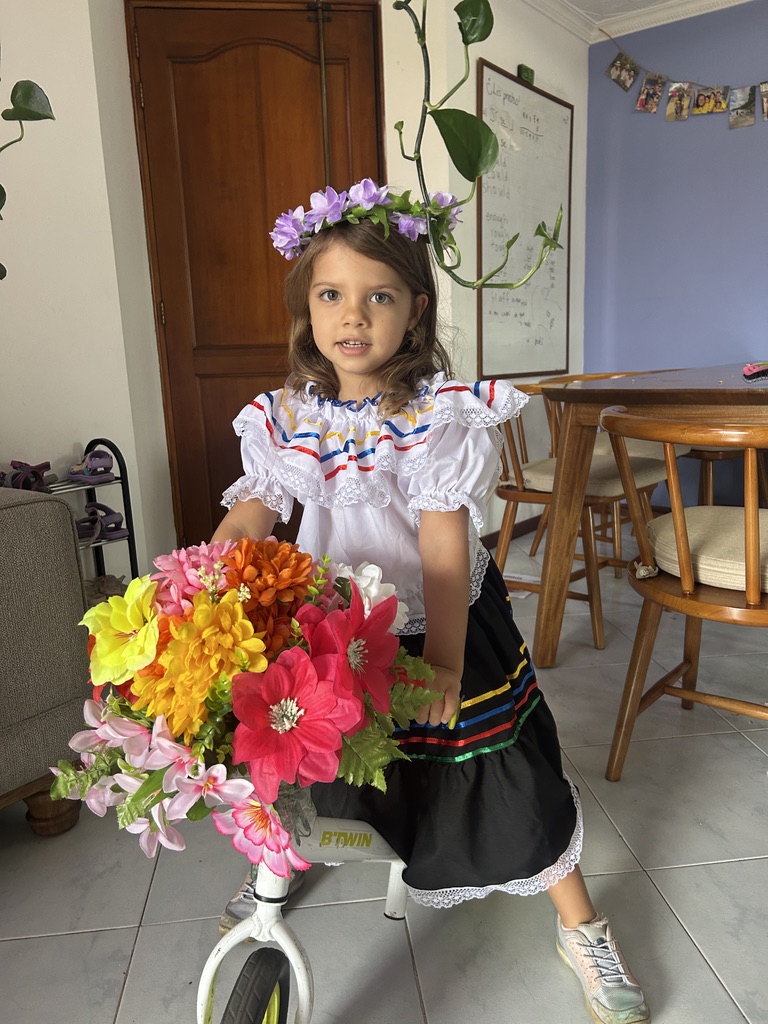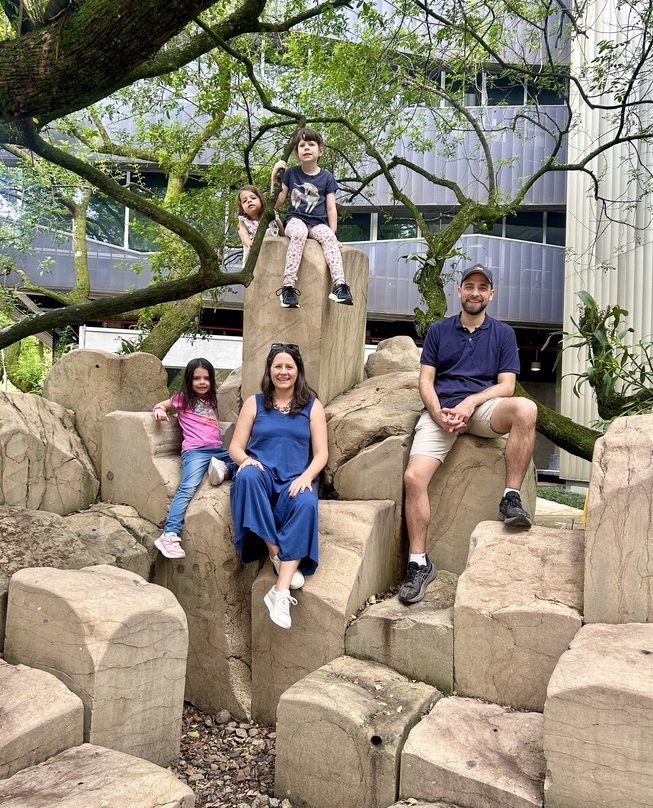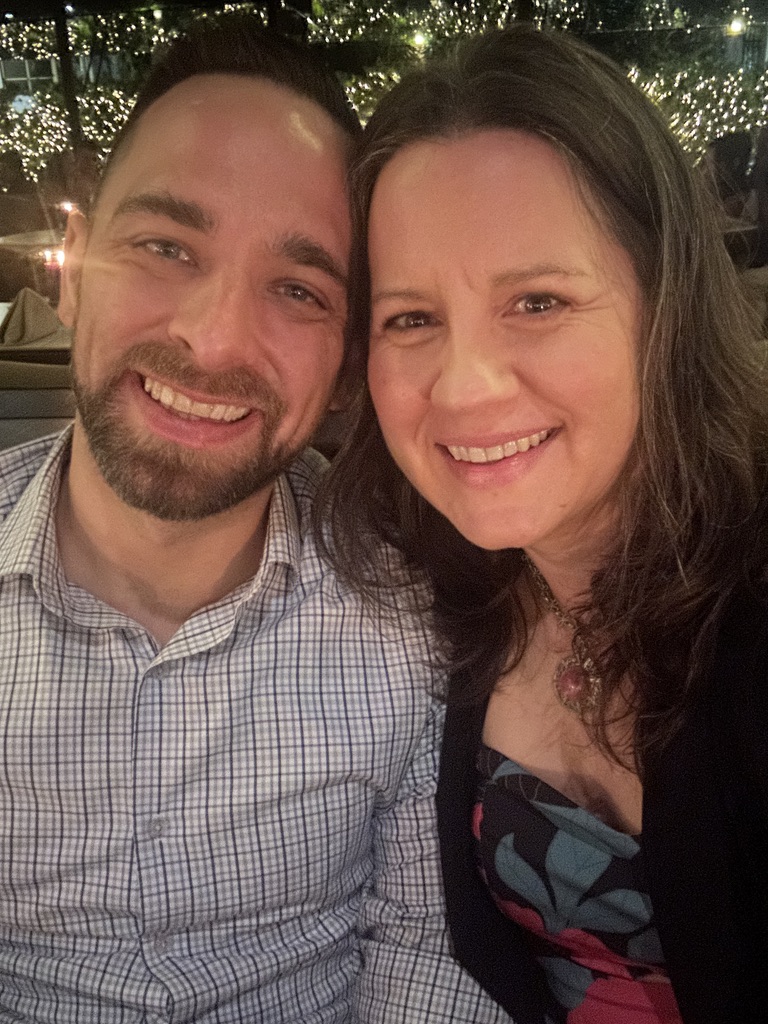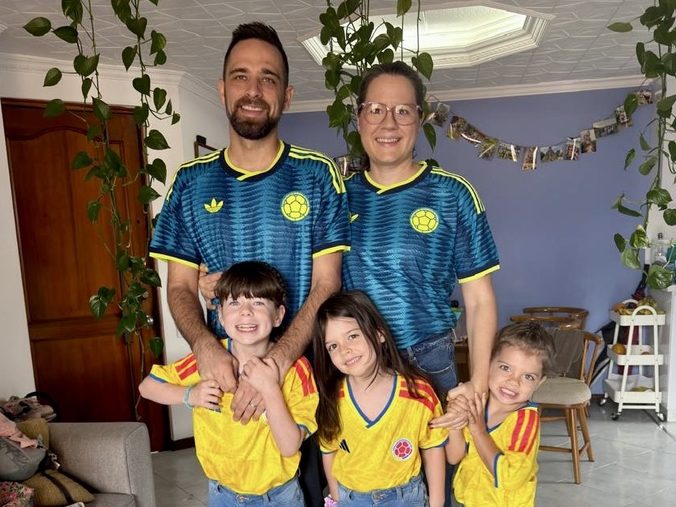
We have lived in Medellín, Colombia for 3 years. I cannot quite believe I am writing those words. What began as a thoughtful and hopeful (yet still with unknowns) 2-year language-culture-travel-family adventure is now… our life. With no plans to return to the U.S. and a business investment visa to (hopefully) enable a more secure long-term residency, We. Are. Here. Now.
We love the life we’ve built. Truly. We still regularly look around in awe that we get to live this life. That we’ve built a life based on our shared values, and we’re really living that out. We unquestionably have difficulties, and the longer you live in a place, the more ‘hard realities’ you navigate. But we are content with the tradeoffs and downsides, and grateful for the opportunities our family has had. We have worked hard, persevered, and in the last year we’ve seen so much fruit from our efforts.
Given this milestone, on a recent date night we made a list of what we’ve learned across these 3 years. So without further flowery intro, and in no particular order, here are a few key ways I’ve grown after living in Colombia.
Life Lessons of Colombia
- I am capable of learning new things. I have historically had a tough time trying something I don’t immediately know how to do. Raised on praise for how “smart” I was, I never internalized that, I could learn new things with hard work and perseverance. So when I can’t figure something out quickly or easily, it often paralyzes me, and I give up.
In the last 3 years, we’ve applied for visas 3 times, bought a car, furnished an apartment from scratch, hired employees and learned labor laws, navigated private school applications, and so much more. All in a non-native language. Not to mention moving from basic language skills to high proficiency. I have worked, fatigued, and honed the learning-new-things muscle over and over. I have been humbled by my ignorance and gone back to the drawing board. Now I feel so much more confident in my ability to enter into something unknown and, well, figure it out. - Be flexible and roll with the punches. Recently we were driving to a double date and our car engine started steaming. We pulled off the side of the road, assessed the situation, and planned what to do. After a while, the wife of the other couple said, “You are both remarkably calm about this. I would be so stressed right now.” And it clicked. For better or worse, life in Colombia comes with quite a bit more chaos—or at least a different kind of chaos—than the US.
Arrive to El Salvador and a 7-seater SUV for which you pre-paid is simply not available? Drive an hour with your kids and in-laws to go to a water park that is inexplicably closed? Out to watch the Copa America final between Colombia and Argentina and through start delays and length the game goes so long all public transportation is closed, and the whole city is looking for an Uber/taxi? I could write a thousand of these scenarios, and not only related to transit ha. We have learned to shift, pivot, think outside the box. And then think again. - Communicate culturally-appropriately in conflict. My communication style is direct and to the point, and in my younger years this (admittedly) bordered on blunt rudeness. And while that has softened over the years, candid directness is still my default and preference. But it simply does not work in this culture. At least not if you want to get what you want, or at minimum be heard.
We’ve learned that everything from verb tense to tone of voice to how you greet a person before you get down to business matters. And oftentimes, even though it *feels* more roundabout, you get what you want faster if you’re a bit less direct. Now, sometimes a squeaky wheel gets the grease, and sometimes sending in a man instead of a woman gets attention faster. But we’ve learned a lot more about when and how to use each tactic. Don’t worry. We still get it wrong plenty of the time. But at least we’re making progress. - Taking care of my body, holistically, is both possible and worthwhile. Living in the DC area and working at jobs that afforded us great health insurance, we were privileged with access to high-quality care. But there is something fundamentally different about living in a place where health and rest are valued as essential. Sick? Well of course you should rest and take the day. On vacation? No one expects a text, call, or email back from you, and will be apologetic if they must be in touch. Want to try to get to the bottom of some health issue, ache, pain, nuisance? You can probably get an appointment within the week, and maybe even in your own home. Appointments might last an hour, or more. And. You will never go bankrupt because of it.
Now, there’s a lot wrapped up in this, including the privilege of access to the private health system and ability to self-pay (which is not the case for everyone in Colombia). But for *me* it is a distinct contrast to my life in the US. And I’ve been far more able to carve out the time, space, and energy to pursue a depth of emotional, mental, and physical health that eluded me before. And I know I’m a better wife, mom, and friend because of it. - Being a mom is a wonderful gift. In the U.S., I so often felt like being a mom, having kids, and taking up space as a family was an imposition. The country is designed for individual adults. In contrast, Colombia values children and families, and its culture is built around them. Older people praise children *quite literally* for their existence, strangers stop to help you if you’re alone with kids, and no one is bothered when kids make noise or messes. It is such a relief. And a blessing. What’s more, people compliment *me* for being a mom, for being ‘valiant’ or ‘strong’ or ‘amazing.’ Can’t tell you I ever once heard that in the U.S. Bit by bit, hearing and experiencing this day after week after month after year, I’ve come to believe it too.
- Life can be full without being busy. In Arlington we had little to no margin, even when we fought hard to keep it. Booked out for weeks. Endless commitments (most of which we elected!). Constant calendar Tetris. It often felt like we had no other choice, and while I *loved* our life, the lack of margin and the inability to live at a sustainable pace was, well, unsustainable. So one of our big priorities in building a life in Medellín was maintaining margin. When we arrived, we had nothing but margin, with no friends, activities, or obligations. But three years in, we have schools, activities, church, friends, travel, a business, and more. Our life is full. However. We are not sprinting; we are in a hearty but sustainable jog. And we feel empowered to take a step back when needed, re-evaluate, and realign our life with our priorities.
- Patient persistence pays off. In our early days, a friend gave me the following advice, “Expect that every task you undertake will take 2-4 tries to accomplish. Almost nothing gets done in one go here, and you’ll be less frustrated if you just expect that.” Boy was she right. This is related to #2 somewhat, but as I look back at how entitled and impatient I was coming from the US, I see how much I’ve grown. Truly. Asking another question. Coming back another day. Calling again. Trying to talk to another person. Going to another site. Asking another dozen questions, graciously, collaboratively, and kindly. Growing in patience and growing in perseverance have not always been easy, but I believe they’ve made me a better human.
Colombia has taught us many more lessons, but seven feel just about right. We are grateful for the many opportunities we have had, and excited for what we’ll learn in the years ahead!